Transforming Manufacturing: Insights from Industry Experience
- Ram Jaladanki (Rama Prasada Rao Jaladanki)

- Apr 7
- 4 min read
The manufacturing sector is undergoing a significant transformation, driven by advancements in technology, changing consumer demands, and the need for sustainability. As industries evolve, understanding these changes becomes crucial for businesses aiming to stay competitive. This blog post explores key insights from industry experience that can help manufacturers navigate this transformation effectively.
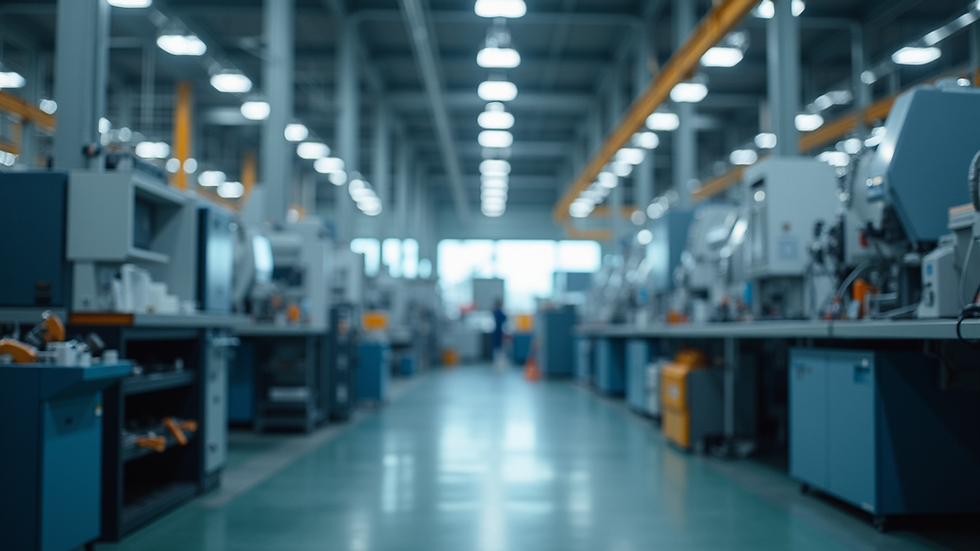
The Current Landscape of Manufacturing
Manufacturing today is not what it used to be. The integration of technology has reshaped processes, making them more efficient and responsive to market needs. Here are some key trends shaping the current landscape:
Automation and Robotics: Many manufacturers are adopting automation to enhance productivity. Robots are now capable of performing complex tasks, reducing human error and increasing output.
Data-Driven Decision Making: The use of data analytics allows manufacturers to make informed decisions. By analyzing production data, companies can identify inefficiencies and optimize their operations.
Sustainability Practices: With growing environmental concerns, manufacturers are focusing on sustainable practices. This includes reducing waste, using renewable energy sources, and adopting eco-friendly materials.
Embracing Technology in Manufacturing
The integration of technology in manufacturing is not just a trend; it is a necessity. Here are some technologies that are making a significant impact:
Internet of Things (IoT)
IoT connects machines and devices, allowing for real-time monitoring and data collection. This connectivity enables manufacturers to:
Predict equipment failures before they occur.
Optimize maintenance schedules based on actual usage data.
Enhance supply chain visibility.
Artificial Intelligence (AI)
AI is revolutionizing manufacturing by enabling smarter decision-making. Applications include:
Predictive maintenance, which reduces downtime.
Quality control through machine learning algorithms that detect defects.
Demand forecasting, allowing manufacturers to adjust production levels accordingly.
Additive Manufacturing
Also known as 3D printing, additive manufacturing is changing how products are designed and produced. Benefits include:
Reduced material waste, as products are built layer by layer.
The ability to create complex geometries that traditional methods cannot achieve.
Shorter lead times for prototyping and production.
The Role of Workforce in Transformation
While technology plays a crucial role in transforming manufacturing, the workforce remains a vital component. Here’s how companies can support their employees during this transition:
Upskilling and Reskilling
As technology evolves, so must the skills of the workforce. Companies should invest in training programs that focus on:
Technical skills related to new technologies.
Soft skills such as problem-solving and critical thinking.
Continuous learning to keep pace with industry changes.
Fostering a Culture of Innovation
Encouraging a culture that embraces innovation can lead to significant improvements. This can be achieved by:
Creating cross-functional teams to brainstorm and implement new ideas.
Providing platforms for employees to share their insights and suggestions.
Recognizing and rewarding innovative contributions.
Case Studies: Successful Transformations
To illustrate the impact of these insights, let’s look at a few case studies of companies that have successfully transformed their manufacturing processes.
Case Study 1: Siemens
Siemens has embraced digitalization in its manufacturing processes. By implementing IoT and AI technologies, the company has improved efficiency and reduced costs. For example, their Amberg Electronics Plant uses smart sensors to monitor production in real-time, leading to a 99.99885% quality rate.
Case Study 2: General Electric (GE)
GE has invested heavily in additive manufacturing. The company has developed a 3D printing facility that produces complex parts for its jet engines. This not only reduces material waste but also shortens production times significantly.
Case Study 3: Tesla
Tesla’s approach to manufacturing is centered around automation and data analytics. The company uses advanced robotics in its production lines and employs data-driven strategies to optimize its supply chain. This has allowed Tesla to scale production rapidly while maintaining high-quality standards.
Challenges in the Transformation Journey
Despite the benefits, manufacturers face several challenges during this transformation:
Resistance to Change
Employees may resist new technologies due to fear of job loss or a lack of understanding. To combat this, companies should:
Communicate the benefits of new technologies clearly.
Involve employees in the transformation process.
Provide adequate training and support.
High Initial Costs
Investing in new technologies can be expensive. Manufacturers should consider:
Starting with pilot projects to test new technologies before full-scale implementation.
Exploring financing options or government grants for technology adoption.
Calculating long-term savings to justify initial investments.
Cybersecurity Risks
As manufacturing becomes more connected, the risk of cyberattacks increases. Companies must prioritize cybersecurity by:
Implementing robust security measures.
Training employees on best practices for data protection.
Regularly updating software and systems to protect against vulnerabilities.
The Future of Manufacturing
Looking ahead, the future of manufacturing is likely to be shaped by several key factors:
Increased Customization
Consumers are increasingly seeking personalized products. Manufacturers will need to adapt by:
Implementing flexible production systems that can accommodate custom orders.
Utilizing data analytics to understand consumer preferences better.
Sustainability as a Core Value
Sustainability will continue to be a driving force in manufacturing. Companies that prioritize eco-friendly practices will likely gain a competitive edge. This includes:
Investing in renewable energy sources.
Reducing carbon footprints through efficient processes.
Global Collaboration
As manufacturing becomes more interconnected, global collaboration will be essential. Companies should:
Build partnerships with suppliers and other manufacturers.
Share best practices and innovations across borders.
Conclusion
The transformation of manufacturing is not just about adopting new technologies; it’s about rethinking processes, workforce dynamics, and sustainability practices. By embracing these changes, manufacturers can position themselves for success in an increasingly competitive landscape.
As you consider your own manufacturing strategies, think about how you can leverage technology, invest in your workforce, and prioritize sustainability. The future of manufacturing is bright for those willing to adapt and innovate.
Take the next step: Evaluate your current processes and identify areas for improvement. Engage your team in discussions about potential changes and explore new technologies that could enhance your operations. The journey of transformation begins with a single step.


Comments